

Buying Arson
The outrage economy only works because we keep buying.

I thought I was the audience.
I’m not.
I’m a customer of fire.
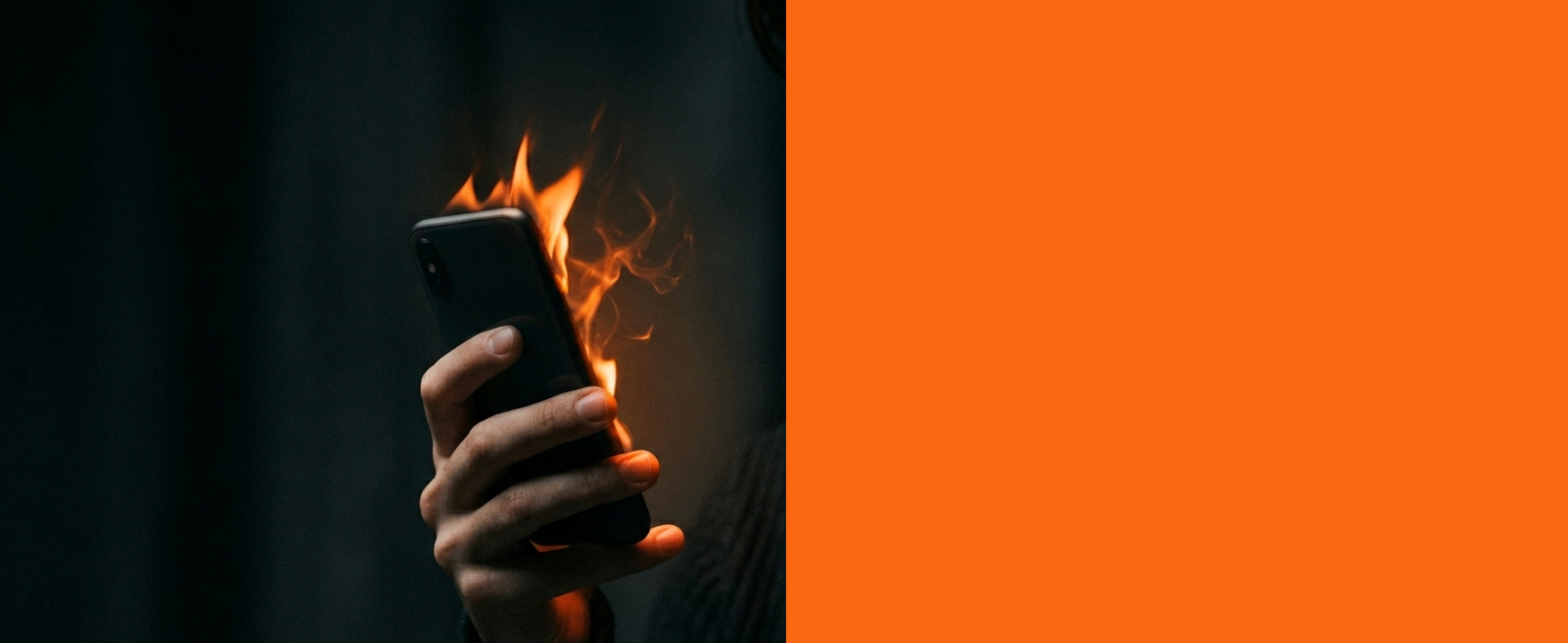
For years, I thought the basic transaction of the internet was simple. Platforms gave me information and entertainment. In return, they sold my attention to advertisers.
That is still true.
But increasingly, I think they are selling something to me, too.
Outrage. Certainty. Conflict. The irresistible feeling that someone else is wrong and I can see it clearly.
Not information designed to inform me. Content designed to ignite me.
They are selling arson.
And I keep buying.
The incentives are not difficult to understand.
Boring doesn’t sell.
“It’s complicated” is a painfully dull headline.
“I can see both sides” doesn’t build much of a personal brand.
“I’m not sure yet” has zero chance of going viral.
Nuance is slow. Uncertainty is unsatisfying. The reasonable middle is, by definition, not particularly provocative.
The edges have an advantage.
Certainty performs better than complexity.
Conflict travels farther than consensus.
Outrage monetizes much better than moderation.
So the market makes things hotter.
People who want attention learn to sharpen their positions. Platforms learn which subjects keep us watching. Algorithms learn what makes us stop, click, comment, and share.
There is enormous money in capturing and holding our attention. Joe Rogan’s latest Spotify deal was reported to be worth as much as $250 million. Whatever you think of Rogan, that is a staggering valuation for one person’s ability to hold attention.
You do not necessarily have to lie.
You just have to be notably more interesting than the next person, and one easy way to do that is to become more certain.
More provocative.
More extreme.
Turn up the heat.
Here’s the part I find harder to admit.
I understand how this works.
I have spent much of my career thinking about brands, media, attention, business models, and human behavior.
I know that platforms reward engagement.
I know that algorithms learn from behavior.
I know all of this.
And I still fall for it.
I click on the headline I know was written to activate me.
I linger on the thing that makes me feel something.
I share what feels white-hot, not necessarily what is most useful or true.
I return to voices that sound certain, even when I know the world rarely is.
Sometimes I click on something I already know I’m going to disagree with.
Why?
I’m human. And that little hit feels nice.
I’d like to think my understanding of the system makes me immune to it.
Instead, it’s only made me a more self-aware accelerant.
That is the part we tend to miss when we talk about what has happened to media.
We blame everything else but rarely see our place in the equation.
It’s those manipulative algorithms.
Evil platforms.
Deliberately provocative podcasters.
Outrage-driven cable news channels.
Desperate, attention-seeking influencers.
Opportunistic politicians.
We point to whoever is holding the match.
But the business model does not work without customers.
When I click because I am outraged, I signal value.
Anything I give my attention to is a money maker for someone else.
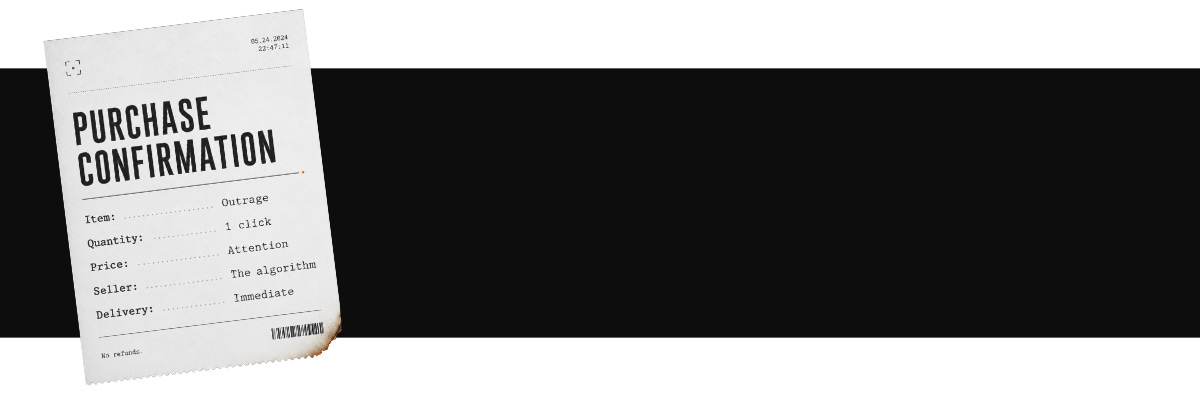
When I watch because I cannot believe what someone is saying, I create demand.
When I share something because it is sharp rather than useful, I become distribution.
The system learns.
The next thing gets a little sharper.
A little louder.
A little hotter.
And then I click again.
I think I am observing the fire.
I am feeding it.
Some things deserve outrage. Some institutions deserve attack. Some moments require people willing to say what others will not.
The problem is that the market cannot distinguish moral urgency from profitable agitation.
It does not know the difference between intensity that matters and intensity that merely performs.
It only sees the response.
A thoughtful person saying, “There are legitimate arguments on both sides,” begins at a structural disadvantage to the person saying, “Everything you have been told is a lie.”
One may be a more accurate representation of reality.
The other is more likely to make me click.
That may be the most uncomfortable realization of all.
The people setting the fires are not operating independently of me.
They are responding to me.
To what I click.
What I watch.
What I share.
What I return for.
The incentives pull people toward the edges because I keep rewarding them when they go there.
It is easy to think of this as something happening to us.
I increasingly think it is something happening through us.
Through me.
The internet has given me extraordinary access to information. More voices. More perspectives. More independence from traditional gatekeepers.
That is real.
It has also given me the ability to consume almost anything I want, whenever I want, with almost no friction.
And given that freedom, I am not sure I consistently choose better.
I choose easier.
Faster.
More stimulating.
I choose the thing that confirms what I already suspect.
The internet did not invent our appetite for outrage.
It industrialized it, measured it, and learned how to sell it back to us.
We are not merely victims of the attention economy.
We are its customers.
The arsonists bring the match.
The platforms build the marketplace.
But every click is a purchase.
And I keep buying.

It seems more and more people are coming to this conclusion and deciding to check out of the Internet. When I see the posts from younger generations, they don’t seem to be a big fan of social media or AI.
The youth might be onto something.